
MUTUALLY ASSURED DESTRUCTION
MUTUALLY ASSURED DESTRUCTION
IIA
The argument that nuclear deterrence and the strategy of Mutually Assured Destruction, have kept the peace during the cold war is a falacy.
Robert S McNamara, former US secretary of defence said, in the documentary film 'The Fog of War';
1. I want to say, and this is very important: at the end we lucked out.
2. that in just 7 years we came “within a hairs breadth” of nuclear war on three separate occasions.
3. 'The indefinite combinations of human fallibility and nuclear weapons will' in time 'lead to the destruction of nations.'
On the assumption that there was a 5% chance of war on those three seperate occasions we can estimate that there is a 50% probability of Mutually Assured Destruction each 32 years.
It should be noted that this is beyond the level of acceptable safety levels for even a single fatality in industry today.
The risk of total destruction has been justified today as necessary in order to avoid the risk of being ruled by any other government but our own.
Any quantitative comparision of the risks and consequences renders this method ineffective.
An effective means of defence must present less risk than it mitigates or it is irrational.
It is the responsibility of governments and the military and the arms industry to make the transition to a genuinely affective means of defence.
It is time to recognise that no one individual, city or nation has a greater right to defence than any other and that no individual, city or nation has the right of access to offence, even if it is claimed to be only for counter offence. Societies are sufficiently volotile that such promises are never kept.
The thought and development of appropriate defence-only strategies and machinary will be costly and it is proposed by the IIA that many nations will contribute to a common fund for its development and that it will form a common basis for defence of all nations against all aggressors.
The longlevity of humanity depends on a common effective and safe means of defence.
correspondence to: defence@intintage.com
This is part of the transcript of the film "The Fog of War" which was a lengthy interview conducted with Robert McNemara by Errol Morris. The full transcript can be found on the internet.
McNamara: In my life, I've been part of wars. 3 years in the U.S. Army during World War II. 7 years as Secretary of Defense during the Vietnam War. 13 years at the World Bank across the world. At my age, 85, I'm at age where I can look back and derive some conclusions about my actions. My rule has been try to learn, try to understand what happened. Develop the lessons and pass them on.
The indefinite combinations of human fallibility and nuclear weapons will lead to the destruction of nations.
McNamara: Okay. Any military commander who is honest with himself, or with those he's speaking to, will admit that he has made mistakes in the application of military power. He's killed people unnecessarily — his own troops or other troops — through mistakes, through errors of judgement. A hundred, or thousands, or tens of thousands, maybe even a hundred thousand. But, he hasn't destroyed nations.
And the conventional wisdom is don't make the same mistake twice, learn from your mistakes. And we all do. Maybe we make the same mistake three times, but hopefully not four or five. They'll be no learning period with nuclear weapons. You make one mistake and you're going to destroy nations.
I want to say, and this is very important: at the end we lucked out. It was luck that prevented nuclear war. We came that close to nuclear war at the end. Rational individuals: Kennedy was rational; Khrushchev was rational; Castro was rational. Rational individuals came that close to total destruction of their societies. And that danger exists today.
The major lesson of the Cuban missile crisis is this: the indefinite combination of human fallibility and nuclear weapons will destroy nations. Is it right and proper that today there are 7500 strategic offensive nuclear warheads, of which 2500 are on 15 minute alert, to be launched by the decision of one human being?
It wasn't until January, 1992, in a meeting chaired by Castro in Havana, Cuba, that I learned 162 nuclear warheads, including 90 tactical warheads, were on the island at the time of this critical moment of the crisis. I couldn't believe what I was hearing, and Castro got very angry with me because I said, "Mr. President, let's stop this meeting. This is totally new to me, I'm not sure I got the translation right."
"Mr. President, I have three questions to you. Number one: did you know the nuclear warheads were there? Number two: if you did, would you have recommended to Khrushchev in the face of an U.S. attack that he use them? Number three: if he had used them, what would have happened to Cuba?"
He said, "Number one, I knew they were there. Number two, I would not have recommended to Khrushchev, I did recommend to Khrushchev that they be used. Number three, 'What would have happened to Cuba?' It would have been totally destroyed." That's how close we were.
EM: And he was willing to accept that?
Yes, and he went on to say: "Mr. McNamara, if you and President Kennedy had been in a similar situation, that's what you would have done." I said, "Mr. President, I hope to God we would not have done it. Pull the temple down on our heads? My God!"
In a sense, we'd won. We got the missiles out without war. My deputy and I brought the five Chiefs over and we sat down with Kennedy. And he said, "Gentlemen, we won. I don't want you ever to say it, but you know we won, I know we won."
And LeMay said, "Won? Hell, we lost. We should go in and wipe 'em out today."
LeMay believed that ultimately we're going to confront these people in a conflict with nuclear weapons. And, by God, we better do it when we have greater superiority than we will have in the future.
At the time, we had a 17 to 1 strategic advantage in nuclear numbers. We'd done 10 times as many tests as they had. We were certain we could maintain that advantage if we limited the tests. The Chiefs we're all opposed. They said, "The Soviets will cheat." I said, "How will they cheat?" You won't believe this, but they said, "They'll test them behind the moon." I said, "You're out of your minds." I said, "That's absurd."
It's almost impossible for our people today to put themselves back into that period. In my 7 years as Secretary, we came within a hair's breath of war with the Soviet Union on three different occasions. 24 hours a day, 365 days a year for 7 years as Secretary of Defense, I lived the Cold War.
During the Kennedy administration, they designed a 100 megaton bomb. It was tested in the atmosphere. I remember this. Cold War? Hell, it was a hot war!
I think the human race needs to think more about killing, about conflict.
Is that what we want in this 21st Century?
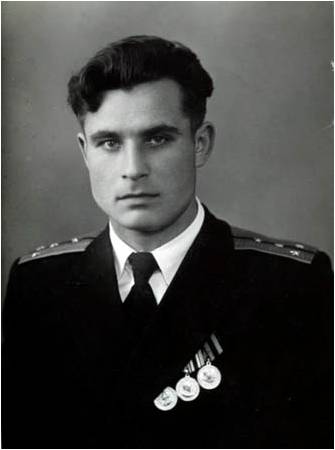
During the Cuban missile crisis an argument broke out aboard a nuclear-armed submarine cut off from radio communication. The second-in-command, Vasili Arkhipov, refused to launch nuclear torpedos against US warships despite an order from Captain Savitsky to do so. [Lloyd, Marion (13 October 2002). "Soviets Close to Using A-Bomb in 1962 Crisis, Forum is Told". Boston Globe. pp. A20. Retrieved 7 August 2012. http://www.latinamericanstudies.org/cold-war/sovietsbomb.htm]
Let us make some assumptions here and say that a hairs breadth was simply an exaggeration and that the chance of nuclear war was perhaps 5% on each occasion. So on each of three occasion the probability of peace was 95%. The probability of no war on all three occasions was 95% x 95% x 95% = 0.953 = 85% that was in 7 years but the cold war lasted 50 so 0.953/7x50 = 33% and the probability of peace in 100 years is of course 0.953/7x100 = 11%. So the probability of peace in one year is 0.953/7=0.978257.
Probably the best way to put this is to say that based on the idea that a “a hair's breadth” meant a chance of 5 % of destroying humanity etc. and that three such events happen every seven years than we have a 50% chance of ending the world every 32 years. What you might call the half life of humanity.
The risks are now higher, with the proliferation of WMDs to smaller nations, the risk of beginning a second multi-lateral cold war are significant and the risk of actual war has to be greater than in the bi-lateral cold war essentially between the USA and USSR. Any limited launches, accidental launches, rogue launches, or launches by non-state entities or covert proxies can lead to nuclear war.
You can change the basic assumptions but the by any assessment this is simply not an acceptable risk.
As it stands the current emphasis on the destruction of civilian populations rather than the defence of them leads to the question who is the enemy.
Clearly than the capability of any organisation for a mass destruction counter offensive does not offer us a road towards a lasting world security but the question must therefore be asked, how long can the current strategy safely continue?